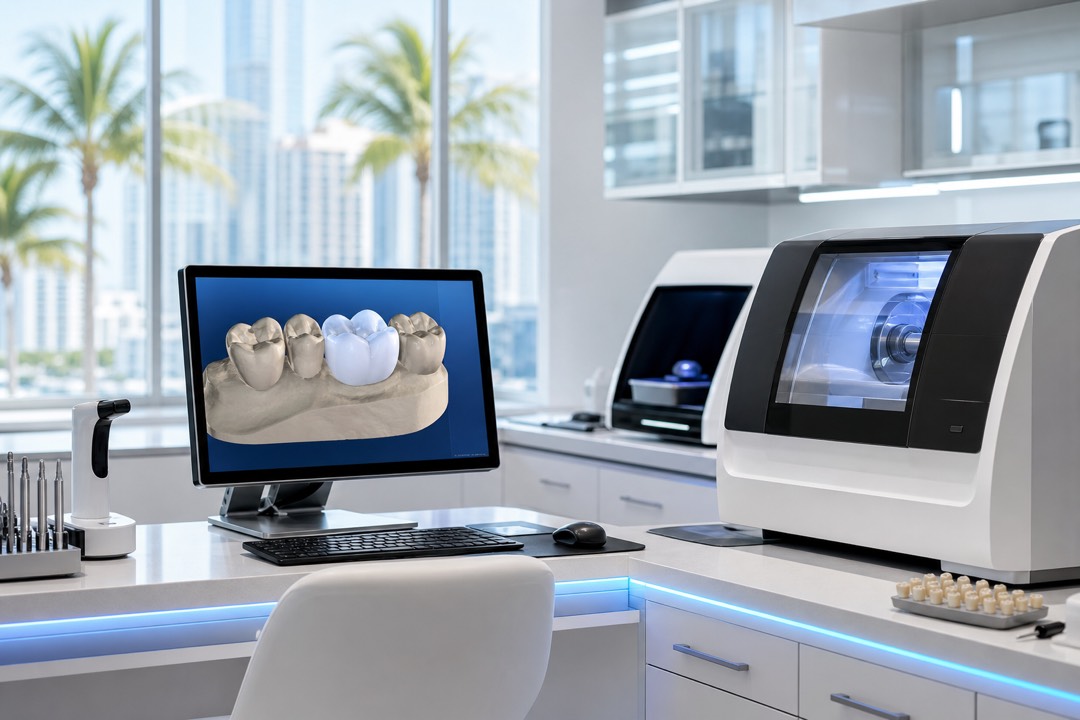
Building an Integrated CAD/CAM Workflow in Miami Labs
CAD/CAM dental equipment that Miami labs invest in should connect scanning intake, design, production, and QC without manual handoffs that cause remakes. Start by mapping how files move from clinic submission to ship date. Multi-location groups across Miami-Dade and Broward need version-controlled project folders and synchronized implant libraries so a case designed at one site mills correctly at another. Open CAD/CAM design software accepting STL from multiple scanner brands prevents turning away new clinic contracts due to proprietary lock-in. Document axis orientation per scanner type because the same arch may need different CAM rotation presets. Production splits logically: milling for definitive zirconia and peek temps, resin printing for models and guides that should not consume spindle hours during rush weeks. Scanner intake sheets listing axis orientation, export settings, and margin preferences per new clinic prevent first-case remakes when files arrive from unfamiliar systems.
Get in touch, we're here to help
Send us a message using the form below and we’ll get back to you shortly!
Equipment Selection Across Milling and Printing
Milling handles billable ceramic units; printing handles guides, models, and try-ins that support those units. An imes-icore milling platform paired with validated CAM templates covers crown-and-bridge volume when sintering and tooling are planned together. Resin printing scales without the same spindle overhead, which helps labs absorb guide spikes before adding second mills. Furnaces, finishing equipment, and design licenses belong in the same conversation because CAD/CAM dental equipment Miami purchases fail when one link in the chain is underspecified. License modules by case type so removable-heavy labs do not pay for implant features they will not use in year one. Verify PC hardware meets CAM and design requirements before install day. Sintering furnaces and milling tooling should be quoted alongside mills because shade outcomes and surface finish depend on the full ceramic workflow. PC hardware specs for CAM nesting and design exports deserve review before install day when anterior cases generate large STL files.
QC Gates, Training, and Ongoing Optimization
Build QC checkpoints at design approval, post-mill inspection, and pre-ship review for anterior cases where remakes are costly. Informal QC lets fit issues reach clinics before your team catches margin or contact problems. CAD/CAM dental equipment Miami rollouts should include training on your clinic files, written SOPs for file intake, and monthly remake logging your supplier reviews during optimization calls. Multi-site groups should audit library versions quarterly so abutment and shade libraries match at every production address. Hurricane-season planning for surge-protected mill PCs and cloud-backed design archives reduces downtime risk. Strong partners help labs publish realistic turnaround tiers by case type instead of accepting every rush job that breaks queue planning for other clients. Monthly remake logging by cause helps suppliers tune CAM templates and training where patterns repeat. Labs publishing turnaround tiers by case type set realistic clinic expectations and reduce rush jobs that disrupt queue planning. Log spindle hours monthly so preventive service stays ahead of emergency rebuilds during peak weeks.
FAQs
How do multi-site Miami labs sync CAD/CAM libraries?
Use centralized license management, scheduled library update windows, and locked project versions before any CAM nest is approved for production.
What scanner file issues appear often with Miami clinic submissions?
Axis orientation differences, incomplete arch scans, and mixed export settings from different scanner brands or software versions.
Should Miami labs use one CAM template for all clinic clients?
Maintain base templates per scanner brand and material, then minor tweaks per high-volume client rather than one generic preset for every case.
How does local turnaround planning affect CAD/CAM scheduling?
Build realistic ship windows that account for QC time and courier pickup schedules when promising same-day or next-day delivery to area practices.
Can CAD/CAM equipment reduce remakes from communication errors?
Shared digital project notes inside design software reduce repeated phone calls about shade, contacts, and implant preferences on recurring clinic accounts.
Your business deserves the best solutions
Let's connect and elevate your business!