
Material Limits Drive Your Dental Milling Machine Decision
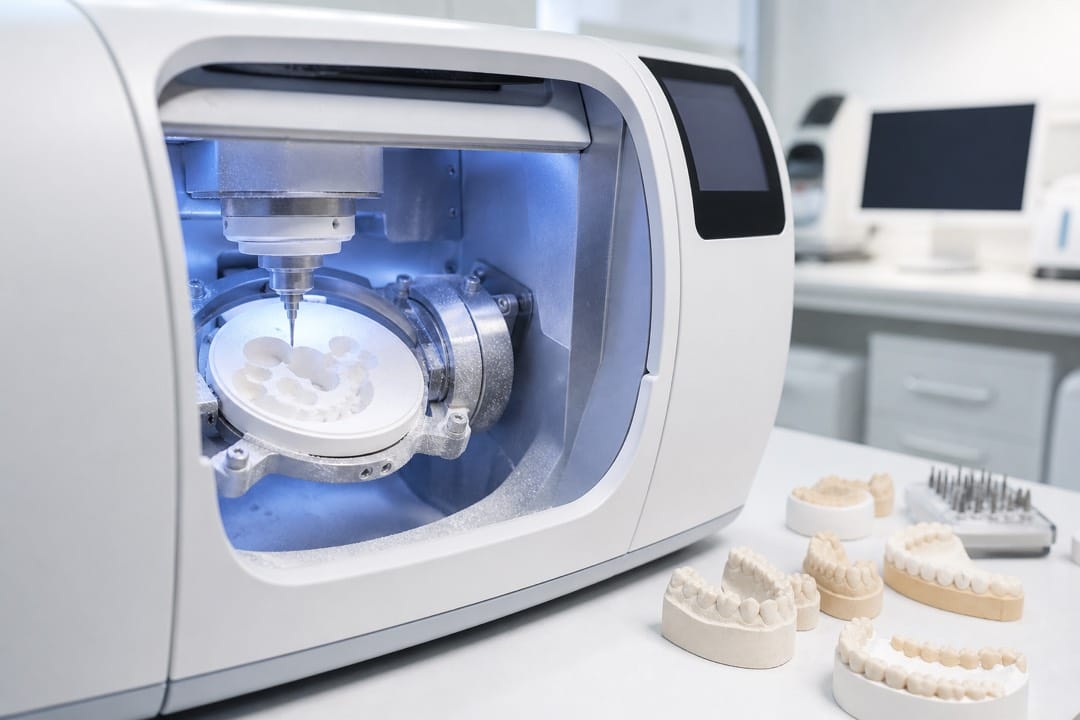
A dental milling machine Toronto labs spec correctly begins with material reality, not brochure photos. Dry mills excel at zirconia and PMMA but struggle with titanium abutments that overheat and dull burs in minutes. Wet mills add coolant management and cleanup time most crown-and-bridge benches underestimate until they see the daily wipe-down schedule. Map your last 90 days of cases: if 85 percent are single-unit zirconia crowns, a dry 5-axis platform probably fits. If implant bars and cobalt-chrome copings appear weekly, wet capability moves from optional to required. Toronto labs serving implant-focused referring practices often see higher implant volume than suburban general practice clients, which shifts the material calculus. Spindle power, tool changer capacity, and axis travel determine whether you can nest a full arch of provisionals overnight or babysit the machine through three manual repositions.
Get in touch, we're here to help
Send us a message using the form below and we’ll get back to you shortly!
Tooling Economics and Zirconia Firing Pairings
The machine price is half the conversation. A 5-axis CAD/CAM dental mill running 6 mm shank burs through 50 zirconia units weekly consumes tooling faster than spec sheets suggest, especially on multilayer blanks with harder enamel layers. Budget bur refresh monthly, not quarterly. Shade-matched multilayer zirconia blanks cost more per unit but reduce staining complaints from clinics comparing restorations under operatory lighting. Factor blank premium into quoting when negotiating with referring dentists. Pair milled zirconia with a sintering furnace programmed for your specific ceramic brand; generic firing curves cause shade drift that shows up under Toronto clinic lighting and generates remakes. CAM strategy affects tool life too. Aggressive step-downs cut cycle time but chip burs on interproximal detail. Your supplier should help tune templates for your technicians’ skill level, not just ship factory defaults. Design software margin settings feed directly into mill behavior: crowns designed with excessive cement space need compensating tool paths that wear cutters prematurely.
Spindle Uptime in a High-Volume GTA Lab
Toronto labs running two shifts or weekend catch-up batches should track spindle hours against manufacturer service intervals. Preventive maintenance every 500 to 800 hours beats emergency rebuilds that idle the bench during peak production weeks. Keep a spare bur set staged for titanium days so a chipped cutter does not stop an abutment case mid-cycle. Noise, vibration, and surface roughness changes often precede spindle failure by days; train technicians to flag anomalies before a catastrophic crash destroys a blank worth more than the service call. Document baseline vibration readings after each spindle service so technicians detect drift early. Blank puck nesting density affects heat buildup; overcrowded plates raise failure risk on long bridge cycles common in multi-unit anterior work. Local support matters when error codes appear and your night technician needs help interpreting them from the manual. A GTA milling partner who stocks spindle cartridges and vacuum fixtures locally saves production days that cross-border parts delays consume. Confirm exocad export folders sync to mill PCs after Windows updates on design stations.
FAQs
When should a Toronto lab choose wet milling over dry?
Choose wet when titanium, cobalt-chrome, or long-cycle glass ceramic jobs appear regularly in your schedule. Dry remains efficient for zirconia-heavy crown-and-bridge production with lower daily cleanup overhead.
How many milling burs should a GTA lab stock monthly?
Count depends on material mix and nesting strategy. Labs milling 40 to 60 zirconia units weekly typically refresh fine burs every two to three weeks; titanium work consumes cutters significantly faster.
Does milled zirconia always require a sintering furnace?
Yes for fully sintered zirconia restorations. PMMA provisionals milled dry ship without firing, which is why many Toronto labs run both materials on the same platform with different workflows.
What causes chatter marks on milled crowns in Toronto labs?
Common causes include worn burs, incorrect feed rates for the material layer, loose blank holders, or CAM templates not matched to your spindle’s horsepower rating.
Can a dental milling machine Toronto dealer tune CAM for my case types?
Reputable dealers customize nesting and tool path templates for your common crown, bridge, and implant geometries rather than leaving you with generic factory presets.
Your business deserves the best solutions
Let's connect and elevate your business!